
The Prisons We No Longer Need
Thirteen years after setting out to shrink the federal prison population, that population is much smaller, the country is much safer, and BOP is finally closing prisons

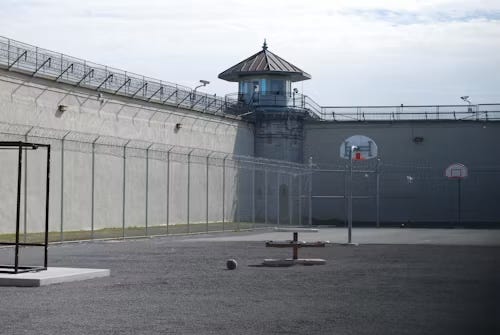
On July 1, the federal Bureau of Prisons announced that it will close a cluster of its institutions. Beaumont Low and Big Spring in Texas, La Tuna outside El Paso, the women’s satellite camp at Lexington, Kentucky, Petersburg Low in Virginia, and the long-dormant facility at Taft, California are all slated to shut down; the minimum-security camps at Morgantown, West Virginia, and Duluth, Minnesota, will be converted into low-security prisons. The Bureau described the decision as one of necessity. Director William Marshall pointed to “longstanding infrastructure and staffing challenges” and a deferred-maintenance backlog that now exceeds $4 billion.
The closings, though, are only partially about budget. More fundamentally, they are the delayed result of a public policy reform effort that began 13 years ago.
- - -
In 2013, I served as the Attorney General’s representative on the U.S. Sentencing Commission. That July, we sent the Commission the Justice Department’s annual letter on federal sentencing policy. We titled it “Facing the Imperative for Structural Federal Sentencing Reform,” and it was not the usual technical commentary on the guidelines or a plea to add a new two-level enhancement. It argued that the determinate-sentencing framework built in the 1970s and 80s — mandatory minimums, the abolition of federal parole, and the assumption that nothing could be done to reduce reoffending — had produced a prison system that was both incredibly expensive and well past the point of marginal effectiveness. And it pointed to the states, where a bipartisan movement called Justice Reinvestment was already proving that a country could lock up fewer people and grow safer at the same time.
A month later, in August, Attorney General Eric Holder stood before the American Bar Association in San Francisco and brought the case to the country. His “Smart on Crime” initiative — announced in that speech — directed federal prosecutors to stop charging low-level, nonviolent drug offenders in ways that triggered long mandatory minimums, expanded compassionate release for elderly and infirm inmates who posed no danger, better targeted prosecutorial discretion, and promoted diversion programs as alternatives to prison. The numbers he cited were staggering. The federal prison population had grown almost 800 percent since 1980. The system was operating nearly 40 percent over capacity. More than 219,000 people were in federal custody. Incarceration in America had annual costs of some $80 billion. We were five percent of the world’s population and held close to a quarter of its prisoners.
The heart of the argument was not only moral, though it was that. It was fiscal and strategic. Every dollar spent warehousing someone who did not need to be there was a dollar not spent on the things that more effectively make communities safer — officers on the street, drug treatment, reentry programming, services for victims. Prison spending, we argued, was crowding out crime-fighting. The states had already shown a way through. Texas, staring at a projected need for thousands of new prison beds at a cost of billions of dollars, chose instead to spend a fraction of that on treatment, supervision, and specialty courts — and then watched its prison population stabilize and its violent crime rate fall. Arkansas, Kentucky, and more than twenty other states, red and blue alike, were running versions of the same experiment: taking the savings from incarceration they could safely forgo and reinvesting them in what works.
Justice Reinvestment was a method more than it was a slogan: analyze the data to find what is actually driving corrections spending, eliminate ineffective prison spending, redirect a portion of the resulting savings into community-based interventions that improve crime detection and reduce reoffending, and then measure whether it worked. What made it powerful was that it was empirical rather than ideological, which is why it drew support from governors and legislators who agreed on almost nothing else. Kentucky reserved its prison beds for its most serious offenders and was projected to save hundreds of millions of dollars. Arkansas trimmed its population even as its crime rate kept falling. The lesson we drew for the federal system was plain: imprisonment is a power to be used more sparingly, only to the extent public safety genuinely requires, and, at the size of the federal prison system then, the resources it ties up are better spent almost anywhere else.
What began as an Obama Administration initiative, incredibly, became something larger and more durable. In 2018, Congress passed and President Trump signed into law the First Step Act with lopsided bipartisan majorities, expanding earned-time credits, easing several mandatory minimums, and nudging the Bureau toward home confinement and halfway houses for people nearing the end of their sentences. The correctional center of gravity shifted — away from more imprisonment and toward supervision in the community. That shift drew population out of the kind of low-security institutions and camps now slated to close.
In many respects, the initiative worked spectacularly. When Attorney General Holder announced Smart on Crime, the federal prison population was 219,000 and expected to grow annually by about 7,500 prisoners for as far as the eye could see. That population today stands at about 153,000, a decline of roughly 30 percent from the 2013 peak — about 65,000 fewer people behind bars. And the catastrophe the critics predicted, that emptying the prisons would refill the streets with crime, simply did not happen. The reverse did.
The Council on Criminal Justice reported last month that crime has continued to fall to levels the country has not seen in generations. Homicide across its sample of major cities was 18 percent lower in the first half of 2026 than a year earlier, and the national homicide rate is likely reaching its lowest point since at least 1900. Yes, there was a spike in violent crime with COVID. But it has reversed as quickly as it materialized. Most offenses now sit at or below where they stood in 2019, before the pandemic. We cut the federal prison population by nearly a third over ten years, and crime went down, not up. Social policy rarely delivers a rebuttal that clean, in this case a rebuttal to the claim that mass incarceration is all that stands between us and disorder.
Despite the success of the initiative, there is one thing I have found disturbing. Even with 65,000 fewer prisoners than back in 2013, the Bureau of Prisons operates more prisons today than it did when Smart on Crime was announced — roughly 126 institutions now, against about 120 then. Fewer prisoners, more prisons. The system shed nearly a third of its population and somehow expanded its physical footprint. Part of the explanation is timing; facilities authorized and financed during the long boom kept opening after the population had already begun to fall. But most of it is plain institutional inertia. A prison, once built and staffed, becomes a constituency unto itself — jobs, contracts, a fixture of the local economy, a web of interests that does not dissolve simply because the beds have emptied. So the BOP did what bureaucracies do: it spread a shrinking population thinner and thinner across a growing, aging inventory of buildings. The $4 billion maintenance backlog is, in part, the bill for keeping all of them open.
This is why closing prisons is not a betrayal of the reform. It is its completion. The argument we made in 2013 was that money sunk into unnecessary incarceration is money stolen from more effective public safety. That argument does not end once the sentencing rules and charging practices change; it applies with equal force to the physical plant. Every dollar BOP spends heating, patching, and minimally staffing an institution it no longer needs is a dollar it cannot spend on the officers it is desperate to hire, on the treatment and reentry programming the First Step Act promised, or on the upkeep that keeps its remaining prisons safe and decent. Director Marshall inherited a system with a real staffing crisis and infrastructure that had been decaying for decades. Consolidating a population that has fallen by 65,000 people is not austerity for its own sake. It is the only responsible way to bring the Bureau’s footprint back into line with the mission it actually has.
None of this makes the closings painless, and an honest case for them has to say so directly. They will hurt. A federal prison is often the largest employer for a hundred miles in any direction. At Beaumont, Lexington, and Petersburg, BOP says affected staff can move to nearby institutions on the same complex. At Big Spring and La Tuna, in remote stretches of west Texas, there is no neighboring complex to absorb them; those employees face a reduction in force or a choice between uprooting their families and abandoning careers they spent years building. The surrounding towns will feel it too — the grocery and convenience stores, the suppliers, the restaurants that a prison payroll keeps in business. These are real people and real communities, and the fact that a closure is justified does nothing to make the losses less real.
The roughly 4,000 incarcerated people who will be transferred bear a cost of their own. Many will be moved hundreds or even thousands of miles farther from home. Decades of research — the same body of research the Justice Department relied on in 2013 — show that maintaining family ties is among the strongest predictors of successful reentry and lower recidivism. A transfer that puts a prisoner three states away from his children is not a bookkeeping detail. It is a real cost to the very goal the reforms were meant to advance.
So the honest question is not whether the closings are costly. They are. It is whether the money and the disruption are better spent maintaining prisons the country no longer needs, or redirected toward the people and communities the whole system exists to protect. That was the logic of Justice Reinvestment a decade ago, and it should govern now. The savings from these closures ought not disappear into a budget line. They should partially flow back into staffing and programming, into genuine support for the workers and towns absorbing the shock, and into keeping transferred inmates close enough to home that the family connections reentry depends on can survive the move.
In 2013, we built the argument that brought the federal prison population down. It is even more convincing today now that the crime figures have answered the skeptics so decisively. But an argument that stops at sentencing and never reaches the buildings is only half-finished. For a decade the Bureau managed decline largely by pretending it was not happening, keeping a sprawling plant intact for a population that kept shrinking beneath it. The closings are, at last, an admission that the decline was real — and a decision to act on it.
When we set out to shrink the federal prison population, the goal was never emptier buildings. It was a criminal justice system scaled to the actual problem — one that reserves the extraordinary power of incarceration for the people who genuinely require it and invests everything else in making that necessity rarer. The federal prison population has fallen by nearly a third. Crime is at a low the country has not seen in a century. And the prisons we built for a different era are still standing, still consuming money and staff we could put to far better use. Closing them will be painful, and it is overdue. It is the last and hardest step of a reform that, by almost every measure that counts, worked.
Unfortunately, the DOJ's position on compassionate release has added to and will continue to add to the federal prison population.
Thank you for writing and sharing this smart, hopeful history.